
Our blueberry program represents our purest expression of organic farming — every single berry is grown without synthetic inputs.
Blueberries demand some of the most precise growing conditions of any fruit we handle. They require acidic soil (pH 4.5–5.5), meticulous irrigation management, and vigilant pest monitoring. But when done right — as we do in our dedicated blueberry blocks — the result is a berry with an intensity of flavor that conventional operations simply cannot match.
Every berry is hand-harvested directly into retail-ready clamshells in the field, eliminating a handling step and reducing damage. Within hours of picking, the fruit is in cold storage. For our quick-freeze program, berries are individually frozen (IQF) to preserve their shape, texture, and that fresh-picked summer flavor for year-round enjoyment.
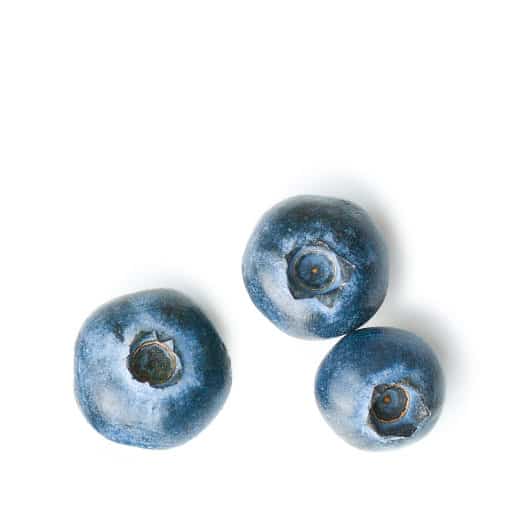
We offer two distinct programs designed to deliver maximum quality for different market needs.

We didn't just add organic to our label — we built an entirely separate program around it.
Our blueberry blocks are managed as closed organic systems. We don't use synthetic fertilizers, chemical pesticides, or genetically modified inputs — not because we have to, but because we believe it produces a measurably better berry. Independent lab testing consistently shows higher antioxidant levels in our organic fruit compared to conventional benchmarks.
Every aspect of the program — from soil preparation to post-harvest handling — is audited annually under USDA National Organic Program standards, with full traceability from field to final pack.
Blueberries are consistently ranked among the most nutrient-dense fruits on earth.
Blueberries are far more versatile than most people realize.

Frozen blueberries blended with banana, Greek yogurt, and a splash of almond milk, topped with granola, chia seeds, and fresh berries. A five-minute breakfast that fuels your whole morning.
View Recipe
Free-form pastry filled with fresh blueberries, lemon zest, and a touch of vanilla. The simplicity of a galette lets the berry flavor shine — no precise lattice work required.
View Recipe
Charred halloumi over arugula with a warm blueberry balsamic reduction. The savory-sweet-smoky combination is unexpected, elegant, and addictively delicious.
View RecipeBlueberries are delicate. A few simple practices make a huge difference in shelf life and quality.
Refrigerate immediately at 32–35°F. Do not wash until ready to eat — moisture on the surface is the primary cause of mold. Store in the original clamshell for best airflow and protection.
When you get home, flip through and remove any soft, shriveled, or moldy berries. One bad berry can spread mold spores to the entire container within 24 hours. Two minutes of sorting can add a week of shelf life.
Counterintuitively, the crisper drawer's high humidity can be too moist for blueberries. They're better stored on a middle shelf where humidity is moderate and air circulation is better.
The technique we use for our IQF program, scaled for your home kitchen.
Remove stems and any damaged berries. Rinse gently in a colander under cold water and pat dry with paper towels. They must be completely dry before freezing.
Arrange in a single layer on a parchment-lined baking sheet. Make sure berries aren't touching — this is the critical step that prevents clumping.
Place the sheet pan in the freezer for 2 to 4 hours until berries are rock solid. The faster they freeze, the smaller the ice crystals — and the better the texture when thawed.
Transfer frozen berries to a freezer-safe bag, squeeze out all the air, and seal. Label with the date. Properly frozen blueberries maintain quality for up to 12 months.