
Apples are the beating heart of Green Field Farms — the crop we started with, the crop we know best, and the crop we never stop improving.
Our Yakima Valley orchards sit at an ideal elevation and latitude for apple growing: warm, sun-drenched days build complex sugars while cool nights lock in crisp acidity and firm texture. The result is fruit with a depth of flavor that commodity operations simply can't match.
From the first Gala pick in August to the final Fuji in late October, every apple passes through our eyes and hands multiple times — in the field during thinning, at harvest, on the sorting line, and at final pack-out. We'd rather leave fruit on the tree than ship something that doesn't meet our standards.
Every variety has its own personality. Tap a name to discover what makes it special.
Select a variety above to explore its flavor profile, best uses, and season.
Crisp, sweet, and aromatic with yellow-orange skin blushed with red stripes. Gala is our earliest harvest variety and one of the most popular apples in America — loved by kids and adults alike for its approachable, honeyed sweetness.
Explosively crisp with large cells that shatter when you bite, balanced sweet-tart flavor, and distinctive mottled red skin. Honeycrisp commands a premium for good reason — there's nothing else quite like it.
Dense, ultra-crisp flesh with an almost syrupy sweetness that intensifies in storage. Fuji is one of the last varieties we harvest and one of the best keepers — flavor actually improves for the first few months in controlled atmosphere storage.
Bright green skin, very firm flesh, and a sharp, tart acidity that holds its structure under heat. The gold standard for pies, tarts, and any recipe where you want the apple to maintain its shape and provide a bright counterpoint.
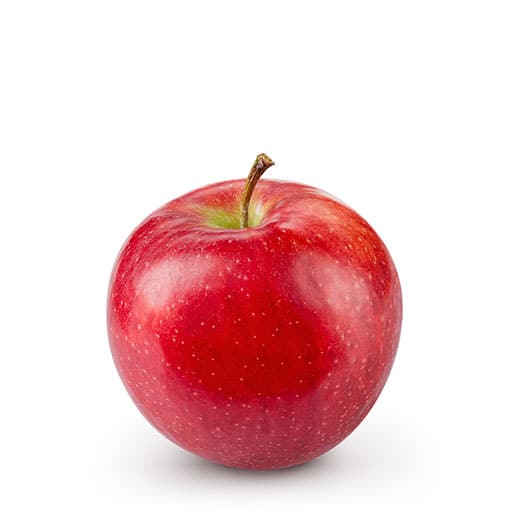
The iconic deep red, conical apple that defined the industry for decades. Our improved strains deliver a sweeter, crisper experience than the mealy supermarket versions you might remember — properly grown Red Delicious is a genuinely excellent eating apple.
A warm pink blush over a yellow-green base, with a distinctive effervescent tartness balanced by honey sweetness. Pink Lady has a devoted following for good reason — complex flavor, firm texture, and a long storage life make it a premium standout.
Bred at Washington State University specifically for the Pacific Northwest. Deep burgundy skin flecked with white lenticels (the "cosmic" dots), remarkably crisp and juicy with a perfect sweet-tart balance, and extraordinary storage life — up to 12 months in CA.
Orange-red striated skin over a green-yellow base, with one of the most complex flavor profiles of any apple — hints of spice, melon, and vanilla over a core of sweet-tart brightness. Excellent for both fresh eating and cooking.
A year-round process of care, precision, and patience that results in the finest fruit.
Dormant season hand-pruning opens the canopy for sunlight penetration and air flow — the foundation of fruit quality.
Bee pollination, frost monitoring, and hand-thinning excess fruitlets to ensure ideal size and sugar concentration.
Picked by hand at optimal maturity using starch-iodine tests and sugar readings. Each variety has its own harvest window.
Controlled atmosphere rooms slow ripening to near-zero. Optical sorting and hand-inspection ensure only premium fruit ships.
From savory salads to decadent desserts, apples shine in every course.

Sliced Honeycrisp or Fuji over mixed greens with toasted walnuts, crumbled blue cheese, and a cider vinaigrette.
View Recipe
A mix of Granny Smith and Braeburn gives the perfect balance of tartness, structure, and complex sweetness.
View Recipe
Braeburn or Pink Lady apples slow-cooked with cinnamon and vanilla until deep amber and spreadably rich.
View RecipeA few simple steps keep your apples crisp and flavorful for weeks.
Apples ripen ten times faster at room temperature than in the fridge. Store at 32–38°F (0–3°C) in the crisper drawer for best results. A single warm apple can speed up ripening of nearby produce.
The crisper drawer's humidity control should be set to high. Apples are 84% water — dry air causes shriveling. A damp paper towel in the drawer can help in especially dry refrigerator environments.
Apples produce ethylene gas, which accelerates ripening in other fruits and vegetables. Keep them separate from bananas, avocados, and leafy greens unless you're intentionally using them to speed ripening.
If buying in a perforated bag, keep them in it — the holes allow gas exchange while maintaining humidity. Loose apples can be placed in an unsealed plastic bag or a dampened cloth bag.